

What your graduates and apprentices actually learn
This is not a generic graduate-skills library. Every module is written specifically for early-career building surveyors in UK practice and built around the work they are actually given. The curriculum has two strands: how to work professionally, and how to carry out the practical tasks that land on their desk.
A seat gives one learner 12 months' access to the full library, including anything added during their licence.
The Way You Work
The professional habits and expectations a new starter is otherwise left to pick up by osmosis: how to conduct yourself, how to take ownership, how to look after a client, and where the APC is heading.
Your first weeks and months
Get to grips with your role and understand how to make the most of your initial experiences.
The APC: your path to chartership
Understand what's involved in the APC pathway to becoming Chartered. Relevant for both graduates and apprentices.
Taking initiative and being proactive
Learn how to spot what needs doing before you're asked, and take ownership of your work.
Good client care for early-career surveyors
Communicate professionally with clients, manage expectations, and build trust through clear, reliable service.
Up and running (3 months onwards)
Explore the key responsibilities, tasks and typical opportunities available for your development after three months or so.
The Work Itself
The tasks juniors are actually given: emails, inspection photography, minutes, site safety, drawings and design reviews. Each course shows what a good version of that task looks like, taken at the point the work lands rather than in a fixed order.
Professional email writing
Write clear, confident, professional emails that reflect well on you and your company.
Inspection photography for building surveyors
Capture and organise site photographs to create accurate, professional project records.
Attending meetings and taking minutes
Gain confidence contributing to meetings and producing clear, accurate minutes.
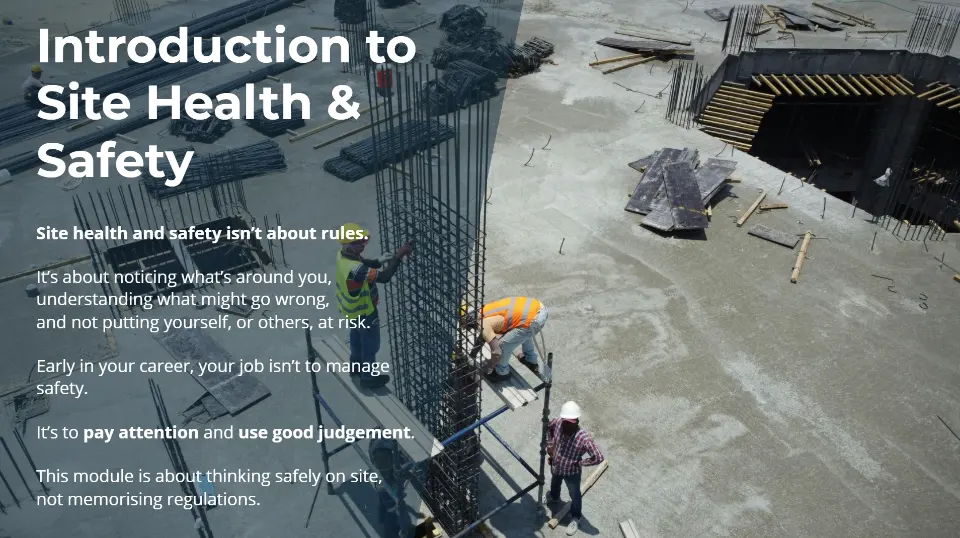
Introduction to site health and safety
Recognise and manage common on-site risks to maintain a safe, compliant working environment.
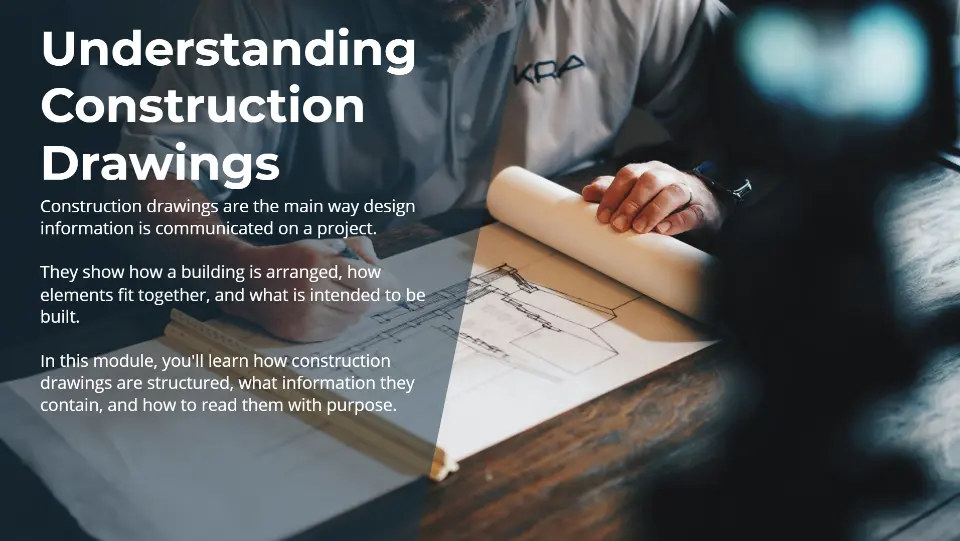
Understanding construction drawings
Review and interpret drawings to spot issues early.
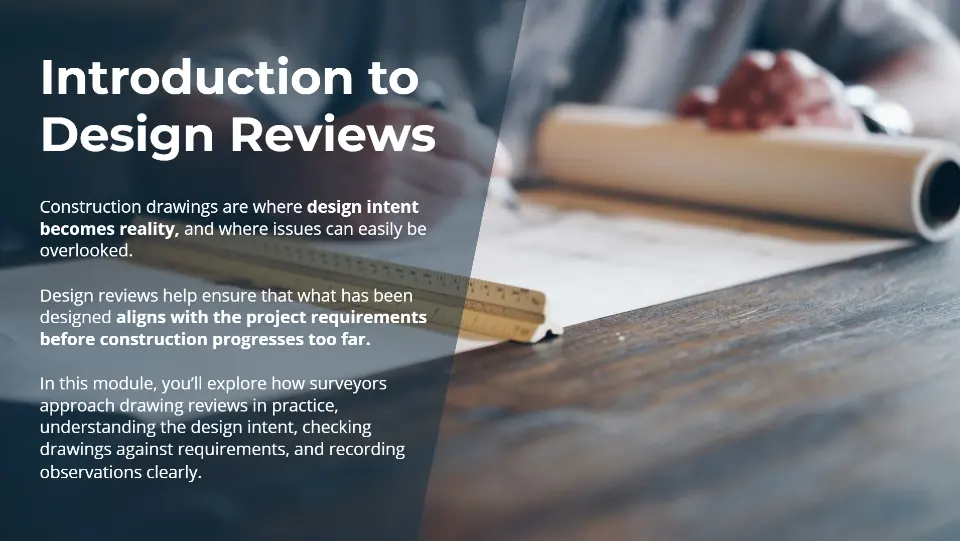
Introduction to design reviews
Make sure designs meet practical and regulatory standards.
The courses as learners see them
Opening screens from across the library. Plain English, written for the work juniors are actually given.









The library keeps growing
New courses are released into both strands through the year. As the library grows during the licence term, learners get access to every new module released during their active licence at no extra cost.
If there is a task your juniors keep getting wrong, tell us. What gets built next is shaped by what firms say they are having to teach from scratch.
Suggest a courseWhere the library is going
The library keeps growing, and these are the subjects in the pipeline to be written and released next. Each one is pitched at someone early in practice who is building knowledge and starting to apply it on live work, rather than a senior refreshing what they already do.
Anything published while a learner holds a licence is included in that licence, at no extra cost.
Contract administration and JCT
Value work in progress on site and understand what an interim valuation is for under JCT. Follow a job through practical completion and handover, monitor the rectification period, and understand what the contract administrator and employer’s agent are each responsible for.
Specification and works
Read a specification and a schedule of works and understand what has been asked for, so you can tell whether what is being built matches it.
Inspections and defects
Carry out a progress inspection and write it up so someone else can act on it. Snag properly, and know what an end of defects inspection is looking for.
Survey work
Take part in stock condition surveys, recognise the building components in front of you, and apply basic fire safety awareness on site.
Professional behaviours
Write a report that stands up to review. Exercise judgement about what to decide and what to escalate, manage your workload and priorities, and work well with clients, contractors and your own team.
These are directions of travel rather than a schedule, and nothing here commits us to a particular module.
Learners cannot simply click 'complete'
Every module ends with a multi-question test. Learners must answer each question correctly before completion is recorded, so they cannot simply open a module and mark it complete.